In 1965 Syd Barrett, Nick Mason, Roger Waters, and Richard Wright formed the band “The Pink Floyd Sound” (later just changed to Pink Floyd), they started off playing covers of rhythm and blues songs, however in 1966 the band started to become pioneers in the British psychedelic rock scene. Syd Barrett was their guitarist, vocalist and main songwriter. This era of Pink Floyd produced “The Piper at the Gates of Dawn” and several non-album singles. “Piper at the Gates of Dawn” had experimental guitar playing, sound college effects, and lengthy jammy songs. However the main appeal this music has to me is lyrical, Syd Barrett’s words about gnomes, scarecrows, and fairy tale kings bring me to another world, and remind me of literary work such as J.R.R Tolkien’s The Hobbit and Grimm’s Fairy Tales.

By the time Piper released Syd Barrett’s mental state was unfortunately deteriorating, during live shows he would sometimes just strum a single chord or stare blankly at the audience. In early 1968, Pink Floyd decided just to stop picking Syd up for live shows, and he officially left the band in April of 1968.

When Syd Barrett left, Pink Floyd’s management left as well due to Syd Barrett (at the time) being the creative core of the band. Syd Barrett was starting a solo career, and for the next year he would record “The Madcap Laughs”. In late 1968, Peter Jenner attempted to produce “Golden Hair”, “Late Night”, and “Octopus” but failed to properly record any vocals. At the start of 1969, production responsibilities were handed to Malcolm Jones. These sessions went much better and yielded “Love You” and “It’s No Good Trying”. Malcolm Jones later remarked “Syd was in a great mood, and in fine form, a stark contrast to the rumours and stories I’d been fed” Another session in the same month had Barrett bring his friends Jerry Shirley (of Humble Pie), and Willie Wilson (of Jokers Wild), these sessions produced “No Man’s Land” and “Here I Go”. A song “Opel” was recorded but didn’t make it on the album for some odd reason. On May 3rd the band Soft Machine overdubbed backing instrumentation “Love You”, “No Good Trying”, and “Octopus”. When asked what key to play in Syd would just reply with “yeah” or “that’s funny”.
Malcolm Jones left the project, and Roger Waters and David Gilmour would take his place. Waters and Gilmour re-recorded several songs and then took a month-long break to record Pink Floyd’s Ummagumma. When they returned they recorded “She Took a Long Cold Look”, “Feel”, and “If It’s in You”. Barrett wouldn’t allow for musicians to rehearse or re-record their overdubs. The Waters/Gilmour recorded songs sound noticeably rushed in comparison to the rest of the album with false starts and studio chatter. Gilmour later said “Perhaps we were trying to show what Syd was really like. But perhaps we were trying to punish him”.

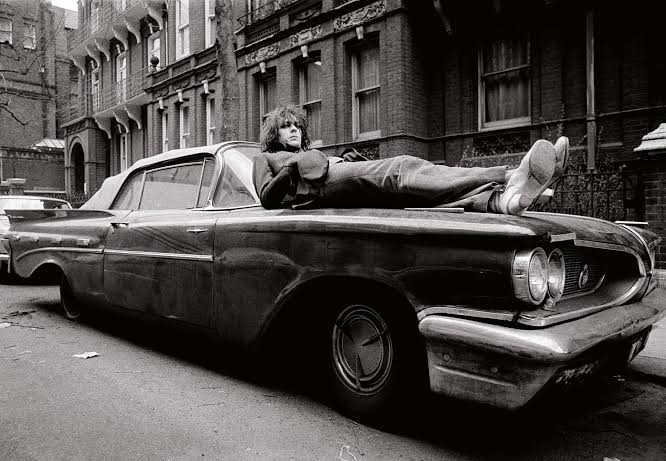
Barrett painted his floor for the album cover on the same day of the photoshoot, and forgot that the photoshoot was happening on that day, and was still in his underpants when the photographer showed up. Barrett’s (kind of) girlfriend? “Iggy the Eskimo” just happened to be running around naked and helped him paint the floor, and she appears on the back album cover. Iggy put her eyeliner on Barrett and he put on random clothes that were near him. Syd Barrett took additional photos on his car that he never drove and was towed shortly after the shoot.


The Madcap Laughs finally released in January of 1970. It starts off with “Terrapin” , a beautiful acoustic ballad with yearning lyrics and some verses about life in the water from a fish’s perspective. “No Good Trying” is a fuzz rocker that immediately changes the feel, a full band plays on this song providing a more traditional psych rhythm section with some short instrumental freak outs scattered throughout. “Love You” is one of my favorite songs in the album (and in general honestly), this song is manic and whimsical, the timing changes constantly and it sounds absolutely mad, this song captures the feeling of madness when you’re in love perfectly. “No Man’s Land” is another fuzz rocker with abstract lyrics that I think described the loneliness that Syd felt at the time. “Dark Globe” is raw and anguished, this song is just Syd and his guitar as he screams about the isolation he feels and the mental health crisis he was going through since 1967. “Here I Go” musically harks back to Victorian musical halls and describes a girl leaving him and comparing him to Pink Floyd, and him getting with her sister afterwards.

Side 2 kicks off with “Octopus”, an absolute banger of a song about going on a carnival ride, but this song also describes a good psychedelic experience almost perfectly. “Golden Hair” is a sung version of James Joyce’s 1907 poem of the same name. Joyce is an author whose writings I feel were likely a big literary influence on Syd Barrett, especially his poetry and more experimental novels such as “Ulysses”. “Long Gone” was about how detached Syd Barrett was feeling from people in general at the time, and talks about a romantic relationship ending because of this. “She Took a Long Cold Look”, “Feel”, and “If It’s In You” were produced by Roger Waters and David Gilmour of Pink Floyd and sound noticeably more rushed then the rest of the album, with studio chatter and false starts, but I still love these songs. “She Took a Long Cold Look” has lyrics that feel like a poetic abstract painting. “Feel” has a similar literary quality to the lyrics, and has absolutely insane time changes and guitar changes. “If It’s in You” sounds chaotic but beautiful. The band returns for “Late Night” which is about the longing Syd felt for his girlfriend after she left him to travel to the United States, this combined with the general isolation he was going through at the time leads to a lonely dismayed sounding song.
Anyways this album is a 10/10 and I STRONGLY recommend listening to it!