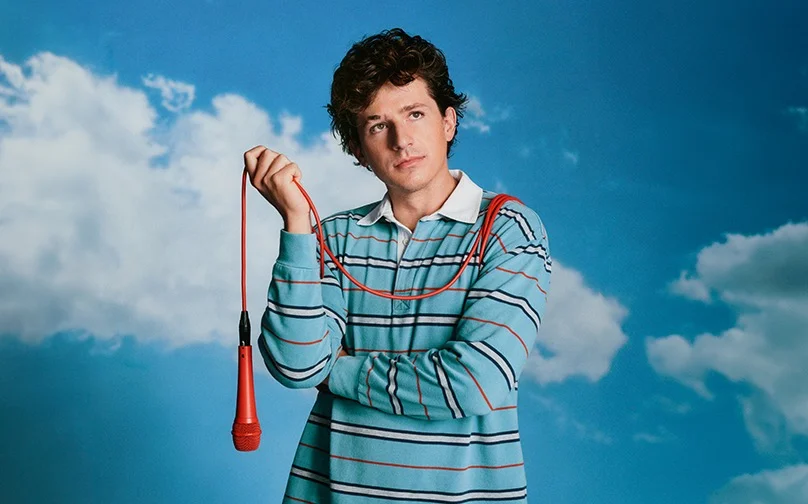
Charlie Puth is a singular artist. His first two albums Nine Track Mind (2016) and Voicenotes (2018) were received with massive mainstream success. In 2016, it was impossible to turn on the radio or walk into a grocery store without hearing one of his hit singles, be it “One Call Away”, “Marvin Gaye” (feat. Meghan Trainor), or “We Don’t Talk Anymore” (feat. Selena Gomez). His music had similar Billboard Hot 100 notoriety with Voicenotes: his hit song “Attention” was essentially the “Espresso” of the era. His sound in these two albums encapsulates late 2010s mainstream pop. They’re clear, bright, and fun.


After the release and fade of Voicenotes, Puth began to fade into the mainstream’s background. He spent more time collaborating, quietly co-writing and co-producing some of the biggest radio hits of the last decade. This includes “Stay” by Justin Bieber and The Kid Laroi, “Minefields” by John Legend and Faouzia, and “Harleys in Hawaii” by Katy Perry. He’s also worked with Pitbull, Jason Derulo, Stray Kids, Calvin Harris, Kehlani, 5 Seconds of Summer, and Zara Larsson. The list goes on.
He reappeared in the spotlight in a new capacity in 2021, when he filmed tiktoks of the production process for his self-titled album Charlie, educating the masses on music theory and calling himself “Professor Puth”. This went especially viral with a tiktok of him building his song “Light Switch” around the sound of a light switch in his studio. Despite its online success, Charlie was a much smaller presence in the musical zeitgeist than his previous two albums upon its release.
Just a little under a month ago, he released Whatever’s Clever!, a new album geared less toward mainstream success and more toward his personal musical interests. It has influences from funk and eighties synth pop, and is highly evocative of seventies/eighties yacht rock. This album isn’t really being talked about, and has hardly appeared on the radio or social media at all. I found this surprising, given both his history of success and features from prominent artists Coco Jones, Kenny G, and Ravyn Lenae (and weirdly, Jeff Goldblum???).


It’s fairly rare today to meet someone who has Charlie Puth’s solo music in their top ten, but luckily for me, my sister is a proud part of that minority. She convinced my parents and I to go with her to Puth’s Whatever’s Clever! World Tour at the Arizona Financial Theater in Phoenix just last night, and it was a wonderful experience.
The show kicked off with a short performance by the first opener Ally Salort. To me, Ally Salort’s music wasn’t extraordinarily attention-grabbing, but was undeniably pleasant. She had a beautiful voice, but a lot of her songs lacked a memorable hook or catchy melody. However, I thought her two newest releases “Finish Line” and “I’ve Never Met Her” showed real potential. Her energy reminds me of other sub-mainstream pop singer-songwriters Maisie Peters, Em Beihold, and Madison Beer.

After Salort’s set, former Why Don’t We member Daniel Seavy took the stage. He walked out without ceremony and began using a looper pedal and a variety of instruments on stage to create the backing track to his first song. It couldn’t have been more clear why production-nerd Charlie Puth asked him to join the tour. At one point in his performance, he asked the audience to shout out a song he had never heard before, listened to it quickly on an audience member’s phone, then used the looper pedal to engineer the backing track and perform it. He showed impressive vocal range and played some quality original pop and pop-rock tracks, making it clear that he’s much more than a washed up former boy band idol. There couldn’t have been a better opener to set the stage for Puth’s expansive performance.


Puth’s first song was a jazzy rendition of “Beat Yourself Up” (one of the lead singles from Whatever’s Clever!), setting the tone for the jubilant show to come. Between the chill music and the bright blue sky on the backing screen, the audience was on vacation and I’m convinced we could all feel a sea breeze.

Charlie was supported by a super talented band of three choir-trained vocalists, a guitarist, a drummer, and a standout bassist. Throughout the show, Charlie Puth and the band would break down the music and just jam, adding tons of live flavor with riffs, runs, and key changes.
The most memorable part of the show for me was the lighting design. There was a large triangular screen in the back of the stage lit up with animations of the sky, music notes, and checkerboard patterns synced with the music. There were lines of sparkling spotlights arranged around the triangle, which also changed colors and twinkled in coordination with the music. The overall aesthetic of the concert was bright, airy, and vaguely americana, and was very well-paired with the new album’s yacht rock sound.


Altogether, this concert was a super free and fun show, put on by an underrated yet highly influential artist of our time. (To quote Taylor Swift: “Charlie Puth should be a bigger artist”). I highly recommend this tour to anyone who has the chance to attend.
